
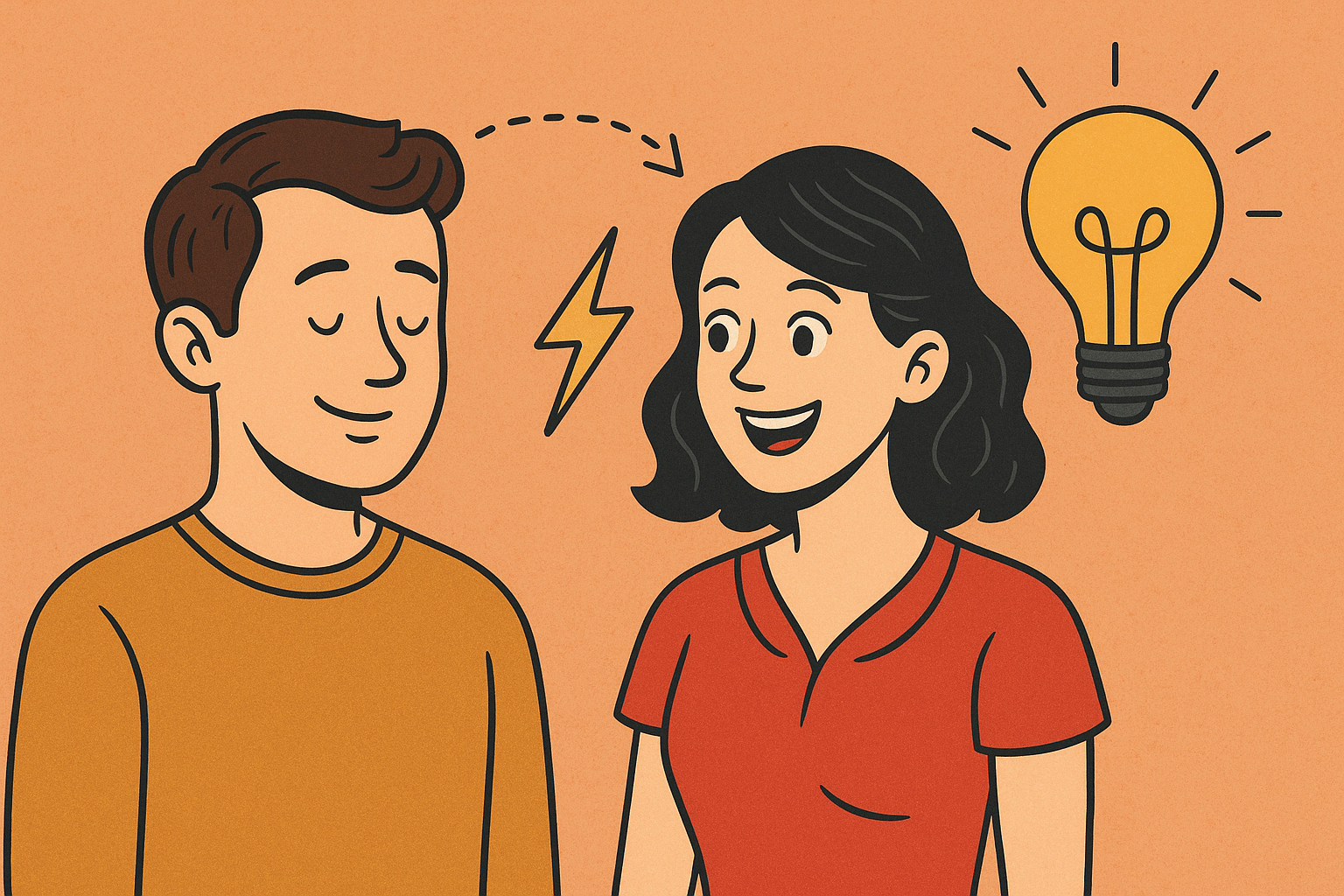
What Is the Coolidge Effect?
Why does something new often feel more exciting than what we already know? Psychology has an answer, and it’s called the Coolidge Effect. This phenomenon explains why novelty —especially in relationships— can spark desire, while routine sometimes dims it.
The term comes from a curious anecdote about U.S. President Calvin Coolidge. During a farm visit, he and his wife toured separately. Mrs. Coolidge saw a rooster mating frequently and asked how often it happened. When told the rooster could perform many times a day, she asked that this be mentioned to her husband. Later, when Coolidge was informed, he asked: “Always with the same hen?” The farmer replied, “No, with different hens.” Coolidge smiled: “Tell that to Mrs. Coolidge.”
From this story came the name of a principle that science later confirmed: sexual desire tends to rise with novelty.
Dopamine and the Search for Novelty
The neurochemical engine behind the Coolidge Effect is dopamine. This neurotransmitter isn’t only linked to pleasure but also to motivation and the pursuit of reward.
- When the brain encounters something new, dopamine spikes.
- This explains why exploring, discovering, or meeting new people feels so stimulating.
- In relationships, novelty can create stronger desire than routine.
In the animal kingdom, studies show that males introduced to new females regain sexual interest even after being tired with the same partner. Humans are more complex, but the principle still influences attraction.
Examples of the Coolidge Effect in Everyday Life
The Coolidge Effect goes beyond sexuality:
- Relationships: passion often fades in long-term couples if nothing new is added.
- Dating apps: the constant variety of profiles keeps the brain hooked, thanks to dopamine.
- Pornography: variety and novelty explain its addictive potential.
- Daily life: from buying new gadgets to chasing new experiences, we often seek novelty for the dopamine rush.
Can Couples Beat the Coolidge Effect?
Yes. While biology pulls toward novelty, psychology offers tools to keep the spark alive:
- Shared experiences: traveling to new places, trying new hobbies, or surprising each other.
- Breaking routine: even small changes —like cooking together or a different date plan— boost dopamine.
- Emotional connection: intimacy is not just about novelty; trust and vulnerability deepen attraction over time.
The key isn’t perfection but novelty within the bond. Couples who reinvent themselves together often sustain desire long-term.
Reflection: Novelty vs. Connection
The Coolidge Effect reminds us that the brain is wired to seek what’s new, but that doesn’t mean long-term love is doomed. Passion can be cultivated by mixing stability with surprise.
So the question is: do you believe desire depends more on the partner you’re with… or on the ability to keep surprising each other?
👉 On our YouTube channel, PsyLife, you’ll find a clear and visual video about the Coolidge Effect, with scientific insights and practical examples of how novelty shapes desire.