What Is Cognitive Dissonance?
Have you ever felt that uncomfortable tension when your actions don’t match your beliefs? That conflict is called cognitive dissonance, a concept in social psychology that describes the clash between what we think and what we do.
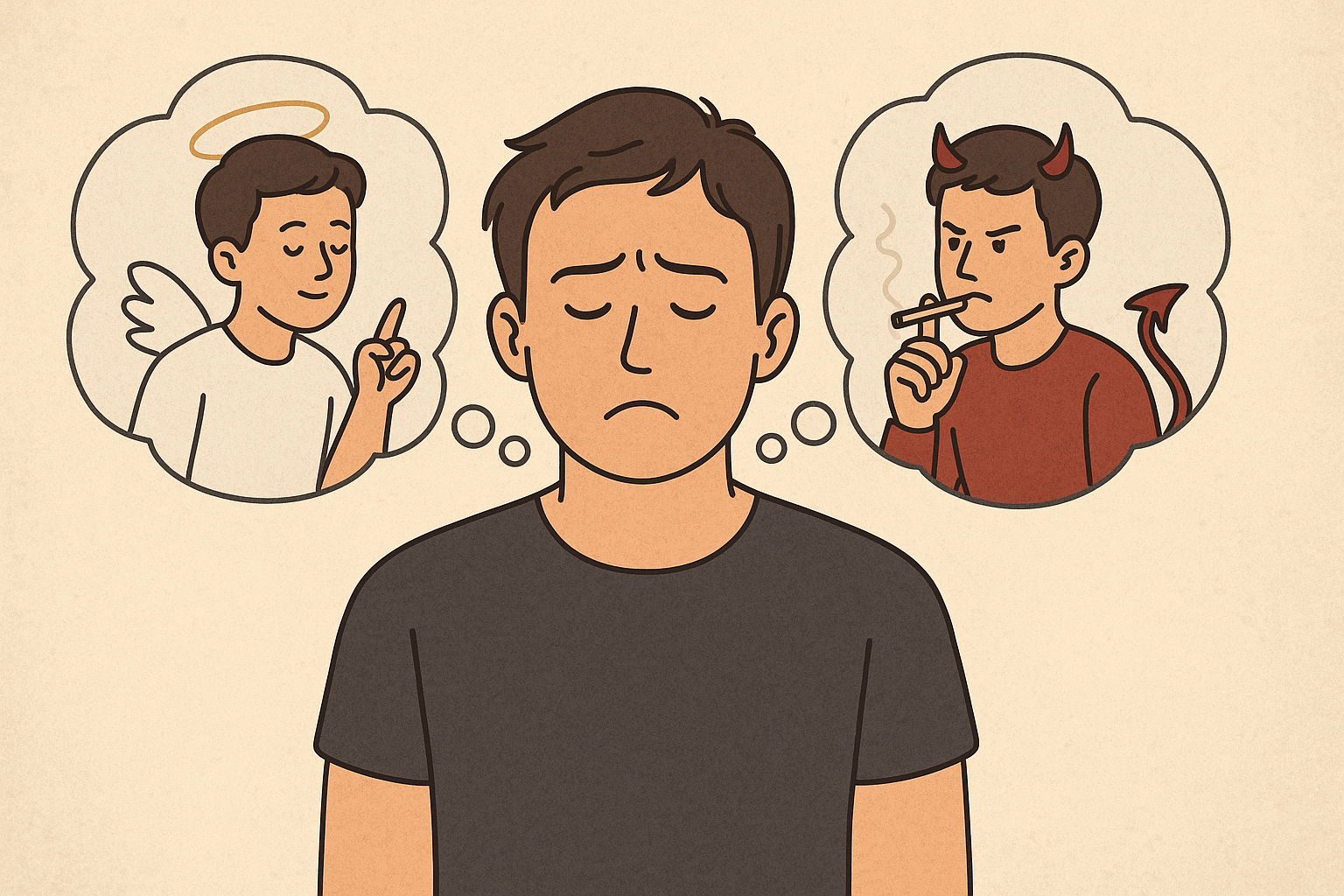
For example: you want to take care of your health, but you light up a cigarette. You start a diet, but end up eating cake. In those moments, the mind doesn’t remain neutral—it seeks an excuse.
The smoker convinces himself that his grandfather smoked all his life and lived to be ninety. The dieter says, “Today is the exception, tomorrow I’ll make up for it.”
Everyday Examples of Cognitive Dissonance
This psychological phenomenon shows up everywhere:
- In relationships: staying with a partner that makes you unhappy, convincing yourself that “one day they’ll change.”
- At work: accepting tasks you don’t like while telling yourself “it’s just temporary.”
- In health: knowing that exercise is good for you but inventing reasons to avoid it.
Our mind doesn’t like contradictions, so it creates justifications—even if they’re not true.
The Origins: Leon Festinger’s Theory
The concept was introduced in the 1950s by psychologist Leon Festinger. He discovered that when beliefs and actions clash, people don’t usually change their behavior… they change their thoughts.
Example: if someone spends a lot of money on a product, they tend to exaggerate its benefits. Why? To reduce the discomfort of having made such an expensive decision.
Why Cognitive Dissonance Can Also Be Positive
Not all dissonance is negative. Sometimes it helps us value our achievements more.
Think about when you study hard for an exam, or sacrifice months of effort to achieve a goal. Your brain justifies the effort and makes the result feel even more valuable. The discomfort of the process transforms into pride.
How to Recognize and Manage Cognitive Dissonance
- Notice the excuses: every time you justify something too quickly, ask yourself if it’s real or just dissonance.
- Align actions with values: if health is important to you, look for small daily choices that reinforce it.
- Question the “someday”: if you’re waiting for things to magically change, it’s probably your mind protecting you from discomfort.
Final Reflection: Living with More Coherence
Cognitive dissonance reminds us that we are experts at deceiving ourselves to avoid tension. But recognizing this mechanism gives us the power to choose differently.
The real challenge is not to silence the discomfort with excuses, but to adjust our actions so they reflect what we truly believe. That’s where inner peace and authenticity begin.
👉 On our YouTube channel, PsyLife, you’ll find a clear and visual video about cognitive dissonance, with real-life examples and strategies to stop living on autopilot and start acting with greater coherence.